
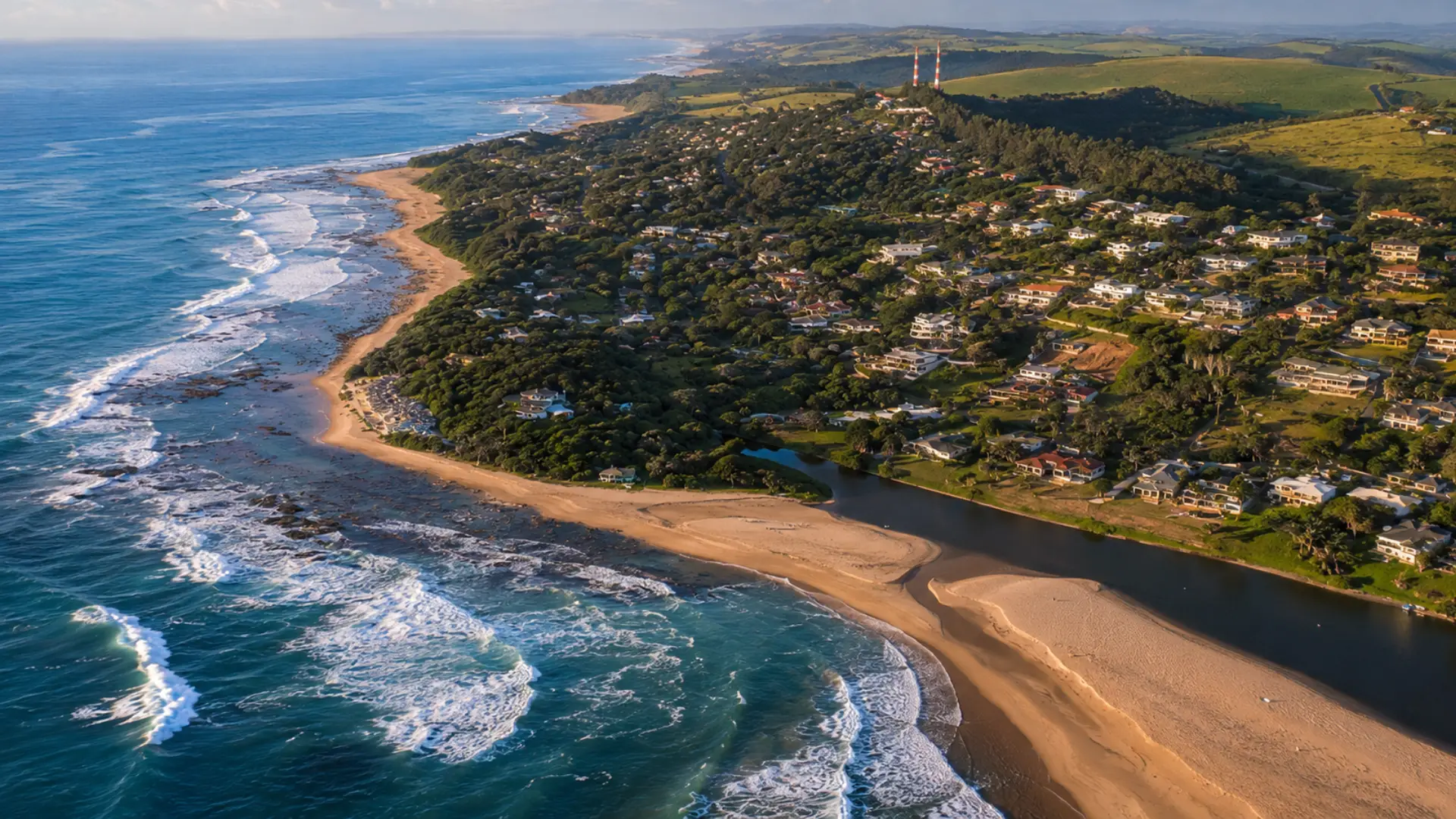
Timing can make all the difference to a coastal holiday. Choosing the right month means warmer swims, better wildlife sightings, quieter beaches, or all three at once.
Fortunately, Zinkwazi Beach rewards visitors throughout the year. This quiet village on the KwaZulu-Natal North Coast, around 70 kilometres north of Durban, enjoys a warm subtropical climate and a relaxed pace in every season.
So when is the best time to visit Zinkwazi Beach? This guide breaks down the seasons, the wildlife calendar, and the busiest periods to help you plan the perfect stay.
Zinkwazi Beach Weather Through the Year
Understanding the seasons is the first step to choosing the best time to visit Zinkwazi Beach.
Helpfully, the North Coast climate stays mild and welcoming all year:
Summer (December to February)
Summer brings hot, humid days and warm ocean water ideal for swimming. Afternoon thunderstorms are common, yet they usually clear quickly. This is peak season for beach lovers.
Autumn (March to May)
Autumn is a favourite among regulars. Notably, the humidity eases while the sea stays warm, and the crowds thin out after the festive rush.
Winter (June to August)
Winter on the North Coast is mild, dry and sunny. Daytime temperatures stay pleasant, rainfall is low, and the season coincides with prime whale watching.
Spring (September to November)
Spring offers warming days and fresh coastal greenery. Consequently, it suits travellers who want comfortable weather before the summer peak arrives.
The Best Time to Visit Zinkwazi Beach for Warm Swims
If sun and sea are your priority, summer is hard to beat.
From December to February, the Indian Ocean is at its warmest and the days are long. Children can swim, surf, and explore rock pools for hours.
However, this is also the busiest stretch of the year, so early booking is essential. Visitors can check regional conditions through KwaZulu-Natal Tourism.
The Best Time to Visit Zinkwazi Beach for Fewer Crowds
Zinkwazi is quiet by nature, yet some months are quieter still.
Specifically, the shoulder seasons of autumn and spring offer the best balance. The weather remains warm, the beaches stay peaceful, and accommodation is easier to secure.
Additionally, mid-week stays outside school holidays give you long stretches of beach almost to yourself.
Whale and Dolphin Watching Season
The Dolphin Coast earns its name year-round.
Bottlenose dolphins are seen along this coastline throughout the year, often surfing the waves close to shore. Migrating humpback whales, meanwhile, pass by between roughly June and December.
Therefore, if marine wildlife tops your list, the winter and early-summer months reward patient watchers with the best sightings.
Fishing Seasons at Zinkwazi Beach
Anglers find rewarding conditions at Zinkwazi in every season.
Notably, the winter sardine run brings extra activity to the KwaZulu-Natal coast, drawing game fish, dolphins and seabirds closer inshore. Summer, by contrast, offers warmer water and longer fishing days.
Both the lagoon and offshore charters stay productive through the year, so keen fishers can plan around their preferred catch.
Visiting During South African School Holidays
School holidays shape how busy any coastal town feels.
Generally, the December and January summer break is the busiest period, followed by the Easter and mid-year holidays. Families travelling in these windows should book well ahead.
Conversely, term-time visits deliver the calmest beaches and the widest choice of accommodation.
Month-by-Month Quick Guide
For a fast overview, here is what each part of the year offers:
- December–February: Warmest swimming, liveliest atmosphere, peak season
- March–May: Warm sea, easing humidity, fewer crowds
- June–August: Mild, dry and sunny, with prime whale watching
- September–November: Warming days, quiet beaches, great value before summer
Choosing Your Ideal Time to Stay
Ultimately, the best time to visit Zinkwazi Beach depends on what you want from your holiday.
To weigh it up, consider:
- Warmest water and lively beaches — choose summer
- Quiet escapes and easy bookings — choose autumn or spring
- Whale watching and mild sunshine — choose winter
- Best value — choose term-time, mid-week stays
Travelling with little ones or a big group? Our guides to family holidays in Zinkwazi Beach and group accommodation in Zinkwazi Beach cover even more planning tips.
Book Your Zinkwazi Beach Stay with Driftwood Estates
For over two decades, Driftwood Estates has helped visitors enjoy Zinkwazi Beach in every season. Our curated collection ranges from cosy coastal cottages to large beachfront villas.
Whatever month you choose, our local team can match you to the right home. Browse our full range of Zinkwazi Beach accommodation and start planning your stay today.
Explore Available Accommodation:
Frequently Asked Questions
When is the best time to visit Zinkwazi Beach?
It depends on your goals. Summer (December to February) offers the warmest swimming, while autumn and spring give warm weather with fewer crowds. Winter is ideal for mild sunshine and whale watching.
When can you see whales at Zinkwazi Beach?
Migrating humpback whales generally pass the KwaZulu-Natal North Coast between June and December, while bottlenose dolphins are seen along the Dolphin Coast throughout the year.
What is the quietest time to visit Zinkwazi Beach?
The shoulder seasons of autumn and spring, especially during school term-time and mid-week, are the quietest. You enjoy warm weather, peaceful beaches and easier accommodation availability.
Is the sea warm enough to swim in winter?
Yes. The Indian Ocean along the North Coast stays relatively mild even in winter, and the dry, sunny days make winter a comfortable time for beach holidays.